
 About
About

Mary Ann Mansigh Series
Who writes the code? Algorithms, software, creativity, and reliability in the age of AI
October 27, 2026, 15:00-18:00 CET
Artificial intelligence is changing how algorithms are conceived, how software is written, and how its outputs are verified. This conversation takes stock of where the field of simulation and modelling stands today and opens a discussion on future directions and best practices — how to safeguard reliability and scientific creativity, how to adapt notions of authorship and ownership for AI-assisted code, and how to preserve and ideally enhance the rich commercial and academic software ecosystem that has driven the growth of computational science in research and development.
We invite submissions for contributed talks. If you would like to propose a contribution, please submit your abstract using this form. Deadline October 13, 2026.
The conversation will take place at EPFL, in room BCH 2103 and online.
Zoom link https://epfl.zoom.us/j/68443642155?pwd=ZPjdZw2KmHzeQ9Pu376iLb0OyMXCV8.1
Tentative program
15:00 Welcome and introduction
15:10 Georg Kresse, University of Vienna, Austria
15:30 Miguel Marques, Ruhr University, Bochum, Germany
15:50 Michele Ceriotti, EPFL, Switzerland
16:10 Short break
16:20 Contributed speaker 1
16:35 Contributed speaker 2
16:50 Contributed speaker 3
17:05 Discussion
17:30 Apero for in person participants
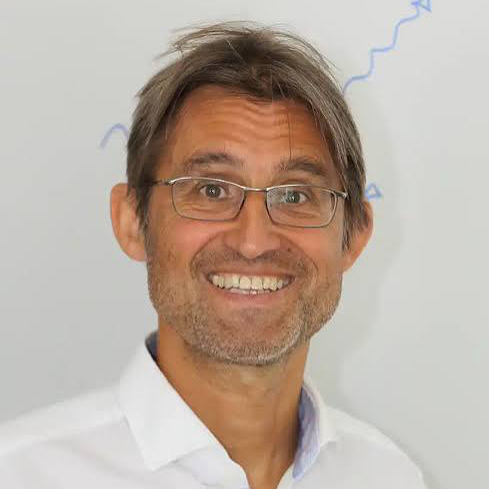
The end of human programming? Managing a multi-agent codebase at VASP
Georg Kresse, University of Vienna
At the VASP Software GmbH, about 70% of our team now uses multi-agent LLM pools to develop software. This rapid shift has shattered the traditional coding pipeline, with code generation now happening so quickly that human review is impossible. This forces us to rely on AI itself for validation and regression testing. While the resulting code may not be aesthetically pleasing, it is undeniably efficient. In this talk, I will share the practical realities of transitioning a major scientific codebase to AI. I will discuss the economics of agent workflows, the continuous leakage of open-source and closed-source IP, the limits of LLMs at the frontier of physics and the profound, often challenging, impact that this shift is having on developer morale.
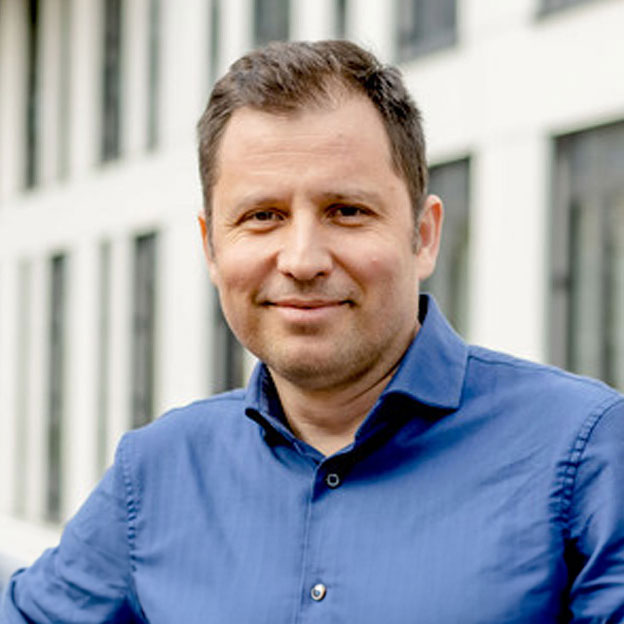
The code writes itself; the physics does not — libxc and waw
Miguel Marques, Ruhr University
libxc is the library of exchange–correlation functionals that most electronic-structure codes call; since May 2026, 129 of its 305 commits were written with a large language model. waw is a Wannier-function engine that did not exist on 1 July 2026 and five weeks later had 69,000 lines of Python, 1,233 tests, and 65 notebooks reproducing the wannier90 tutorials, essentially all of it machine-written under supervision. I will show what this looks like in practice: what the model does better than I do, where it produces plausible and wrong physics, and what validation is now the only thing that separates the two.
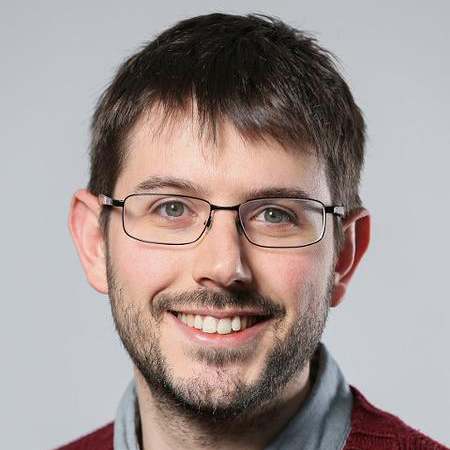
The sound of atoms: using AI to accelerate discovery across disciplines
Michele Ceriotti, EPFL
AI is taking over by storm code generation, testing and review. A series of recent high-profile examples from the pure and applied mathematics community has shown that a similar revolution is happening for more formal tasks such as theorem proving and algorithm development. I will present an example of using AI to identify shortcomings of the structural representations that underpin most of classical and recent equivariant machine-learning architectures for atomistic modeling. The counterexamples found by the AI are much stronger than those identified by Sergey Pozdnyakov and Michael Willatt in 2020 [Phys. Rev. Lett. 125, 166001 (2020)], which raises questions about the role of humans in the math-adjacent activities in our community. Besides the result itself, the discovery process reveals one very powerful mode of operation of LLMs: discovering relevant results from different disciplines, translating them to the language of another community and the use case at hand.
Previous CECAM and MARVEL lectures can be found at
https://www.materialscloud.org/learn/sections/Btmngu/marvel-events