
 About




Almost famous a woman behind the codes
Mary Ann Mansigh Karlsen
Lawrence Livermore National Laboratory, USA
Wednesday November 15 2017
Many of the breakthroughs of the early days of simulation would not have been possible without skilled programmers who translated new scientific ideas into efficient codes that would run without errors on the supercomputers of the 1950s and 1960s.

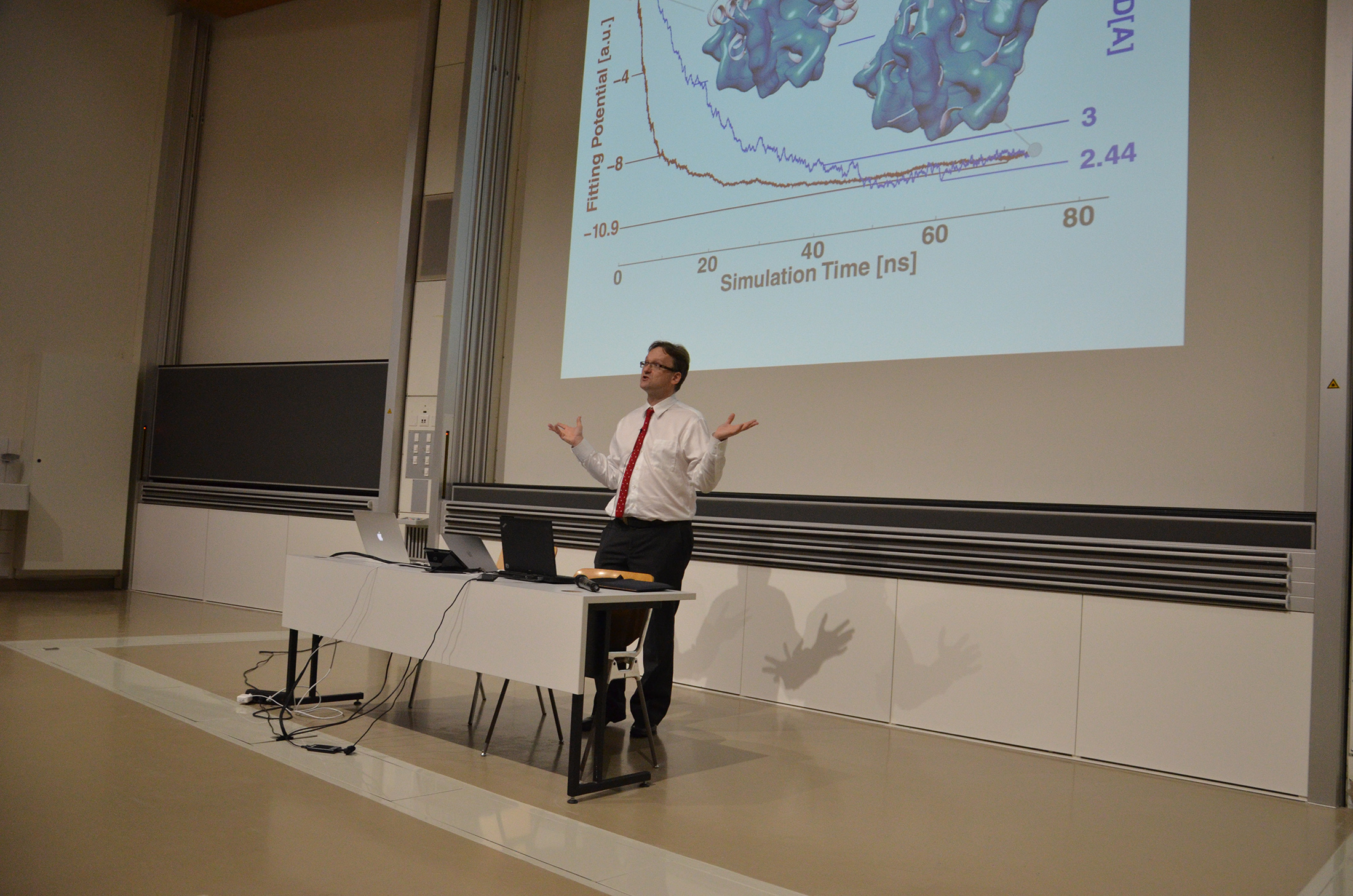
Modeling Experiments in Simulations and Simulations in Experiments: Combining Biomolecular Simulations with Low-Resolution Measurements
Prof. Erik Lindahl
Stockholm University Sweden
Wednesday 23 November 2016
Modeling and simulations of complex biological macromolecules has made tremendous progress since the 1960s as the result of a wonderful marriage of theoretical and computational advances. However, while molecular dynamics simulations have been wonderful
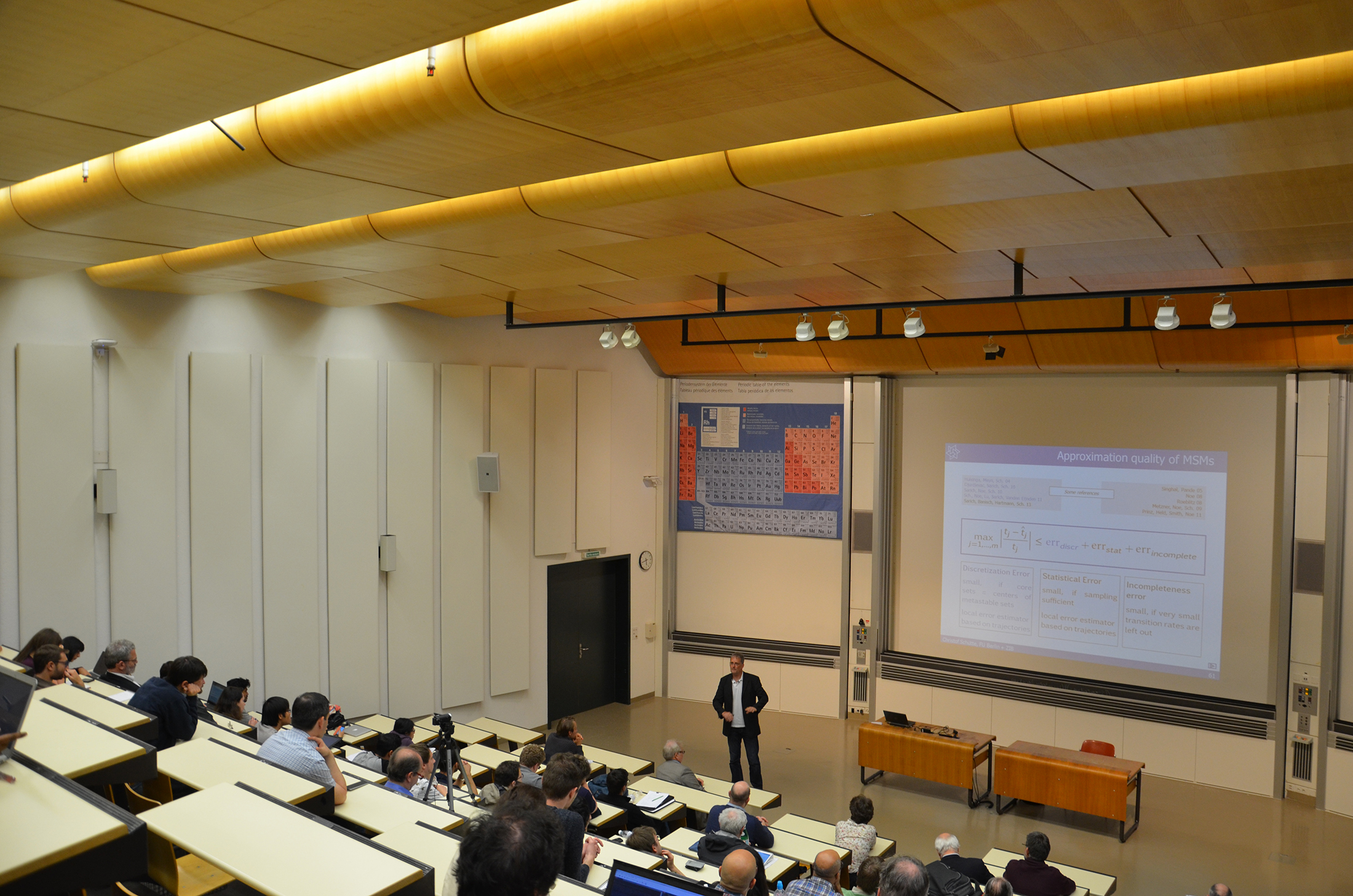
Computational Molecular Design: Mathematical Theory, High Performance Computing, In Vivo Experiments
Prof. Christof Schütte
Free University of Berlin, Germany
Wednesday 25 May 2016
Molecular dynamics and related computational methods enable the description of biological systems with all-atom detail.
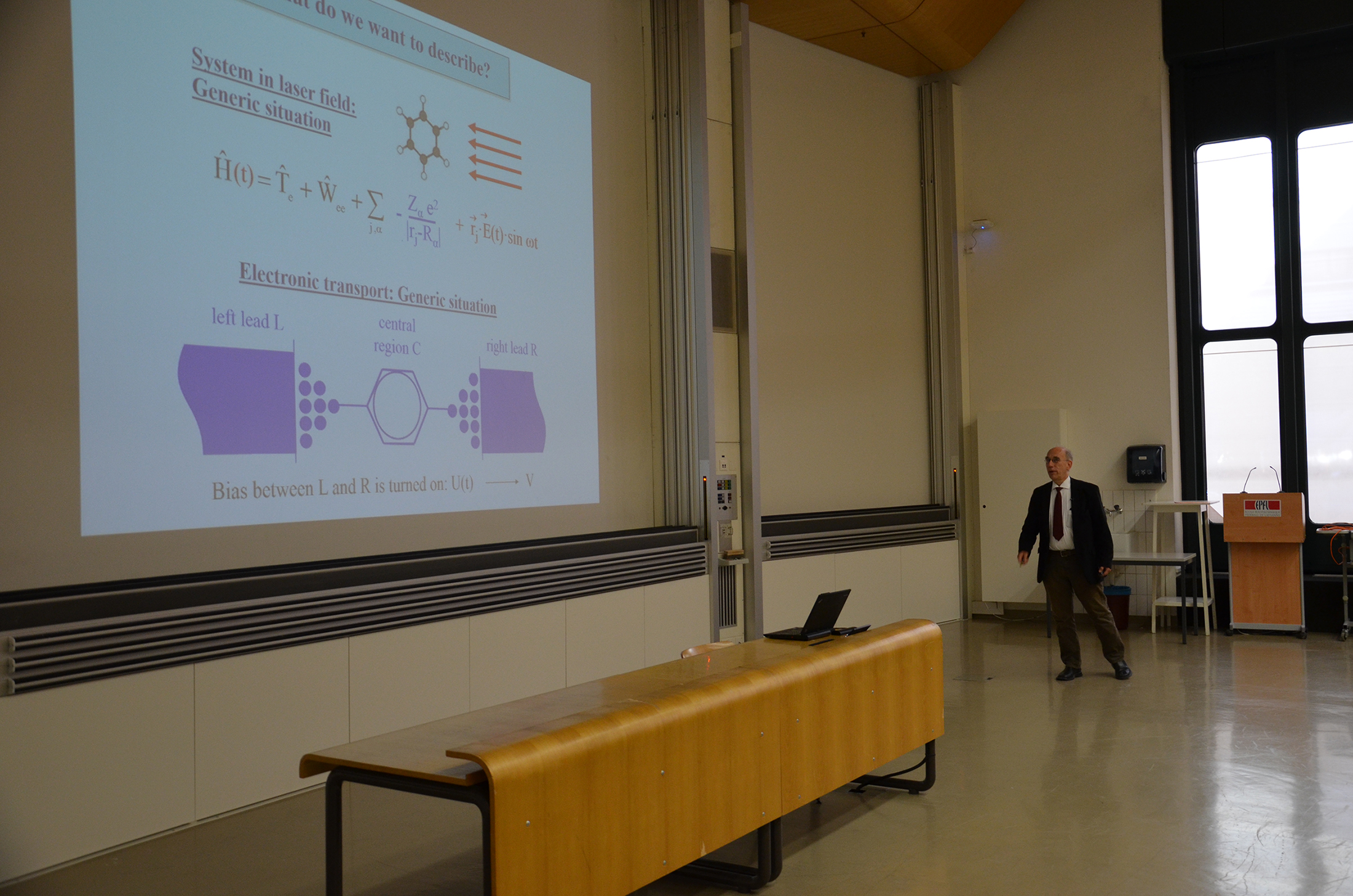
Analysis and control of electron dynamics: An ab-initio perspective on the femto-second time scale
Prof. Eberhard Gross
Max Planck Institute of Microstructure Physics, Germany
Monday 28 September 2015
This lecture is about the motion of electrons, how it can be monitored, analyzed and, ultimately, controlled with external fields on the femto-second time scale. The investigations are performed with ab-initio simulations, using time-dependent density functional theory as theoretical tool. We shall visualize the laser-induced formation and breaking of chemical bonds in real time, and we shall adress questions like:
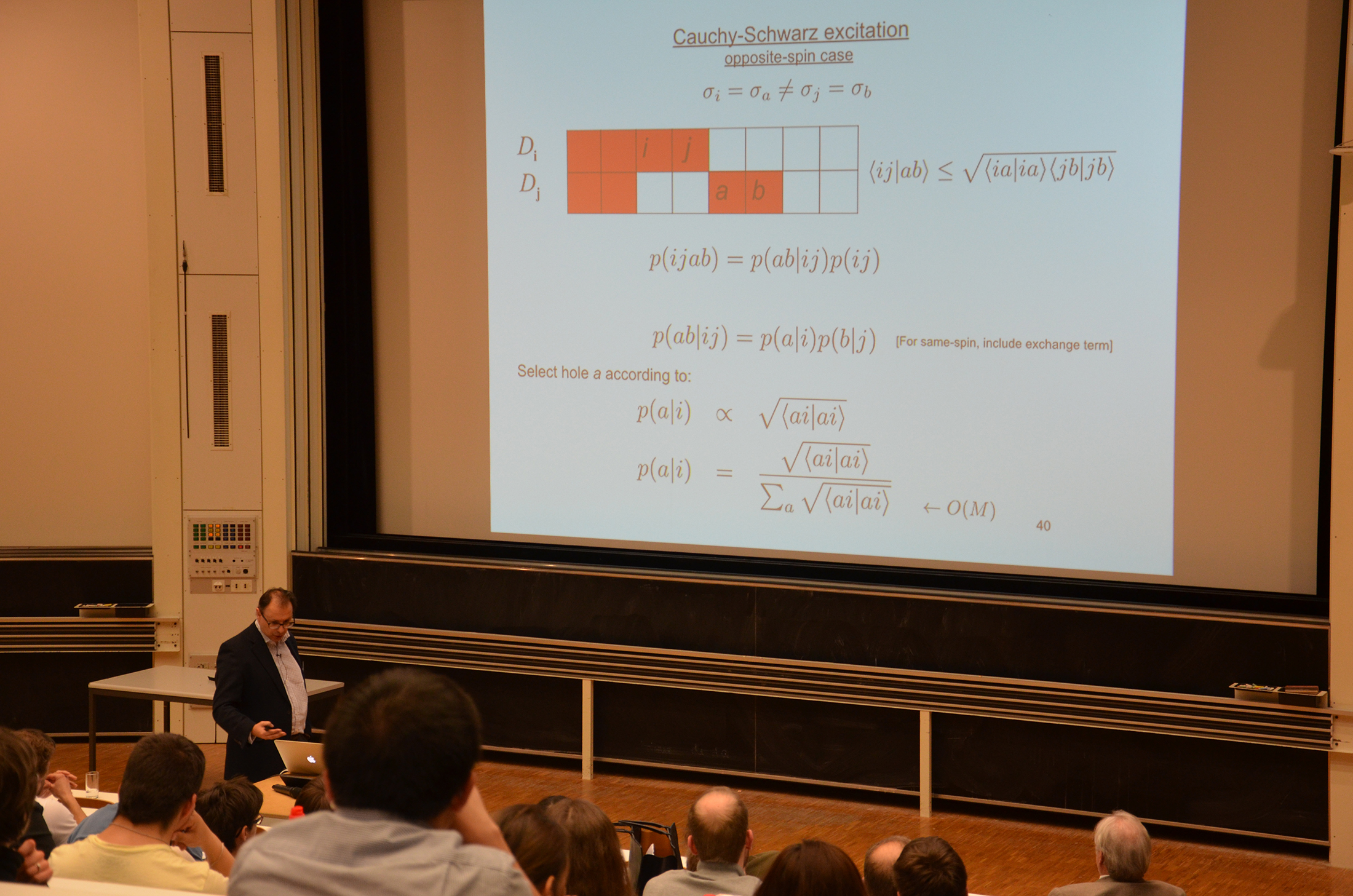
Do we really need Quantum Computers to simulate Quantum Chemistry?
Prof. Ali Alavi
University of Cambridge, United Kingdom
Wednesday 22 Avril 2015
The accurate calculation of the ground state of many-electron systems has been the central goal of quantum chemistry for the last 80 years. Exact methods, such as full CI, can only be applied to systems of a few electrons and it has long been assumed that larger fermionic systems will only be simulated exactly on powerful “quantum computers”.